Will AI Become Your Next Travel Companion?
Travel today is very different from just a few years ago. Booking flights, reserving hotels, and planning trips no longer require hours of research—they can be done in just a few clicks. What made this change possible? Artificial Intelligence (AI) is now shaping the way we travel. Many experts predict that AI travel companions could become as essential as a passport in the near future. Let’s explore how AI is transforming every stage of a journey, from planning to real-time support.
AI in Travel Technology
The travel industry has always been quick to adopt new tools. Now, AI in travel technology is leading the shift. Smart systems can analyze flight prices, hotel reviews, and route options within seconds. For travelers, this means saving time and avoiding the stress of endless scrolling.
AI also powers features like instant translations, digital boarding passes, and predictive flight updates. With these tools, travelers can focus on enjoying their trip rather than dealing with small hurdles.
Virtual Travel Assistant – A New Kind of Guide
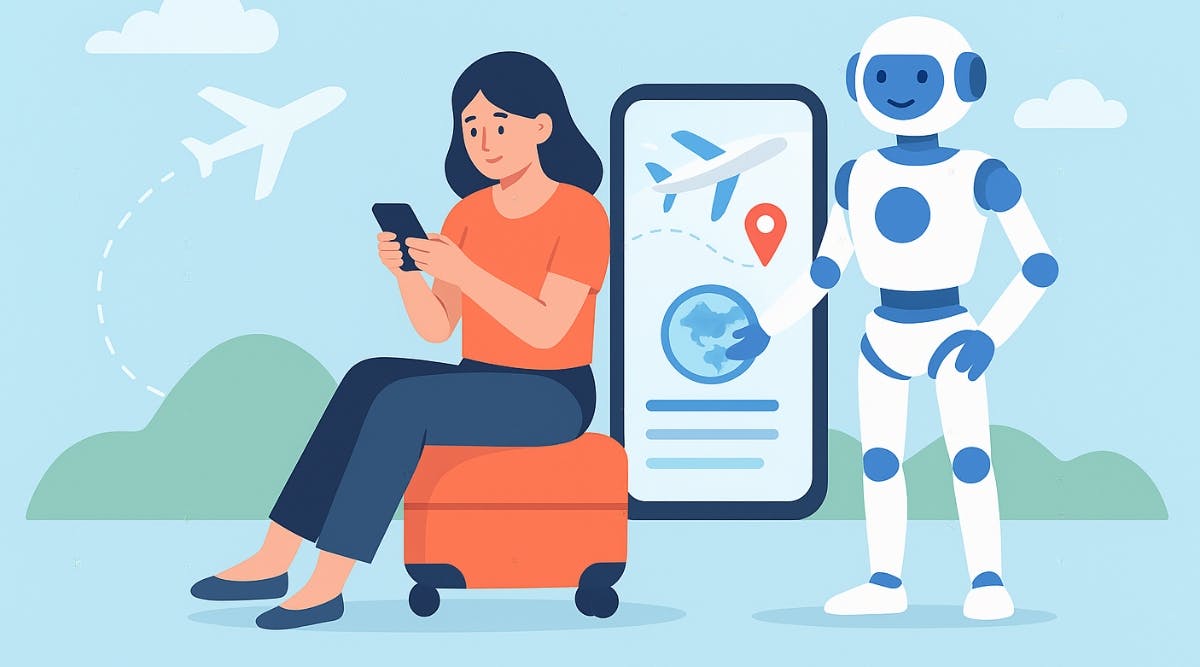
One of the most visible changes is the rise of the virtual travel assistant. Imagine having a smart helper on your phone or wearable device that answers questions instantly. Need to know the fastest way to the airport? Wondering about the best restaurant nearby? Your assistant can respond in real time.
These tools act like digital guides, offering tips that match your preferences. Some even work offline, which is helpful when visiting remote areas.
Read More: How is VR Used in Tourism? A Fun Guide to the Future of Travel
Smart Travel AI for Seamless Journeys
Smart travel AI goes beyond answering questions. It studies patterns in your behavior. If you always look for budget flights or prefer boutique hotels, AI remembers. Over time, it offers personalized travel recommendations with AI that feel tailored just for you.
For example, if you enjoy cultural tours, your AI might suggest a local walking guide. If you travel often for business, it can prioritize direct flights and quiet accommodations.
The Future of AI in Tourism
The future of AI in tourism is packed with exciting innovations. Airports are experimenting with AI-powered systems to speed up check-ins, simplify security checks, and cut down wait times. Meanwhile, some hotels are introducing robot concierges that can deliver room service, provide directions, or offer local recommendations.
AI is also transforming travel through smart luggage and gadgets. GPS-tracked suitcases, digital locks, and self-weighing features are becoming increasingly common, helping travelers stay organized and reducing the risk of lost belongings. Together, these technologies are making trips smoother, safer, and more convenient than ever before.
How AI Helps Travelers Every Step
AI is not just about fancy gadgets. It helps at every stage of the trip:
- Before the trip – AI-powered trip planning tools compare thousands of flights and hotels to find the best fit.
- During the trip – AI chatbots for travel answer questions instantly, provide safety alerts, and even rebook flights if delays occur.
- After the trip – AI helps travelers review experiences, suggest future destinations, and store memories in smart photo albums.
These features save time, reduce stress, and create a more enjoyable travel journey.
AI vs. Human Travel Agents
Many travelers ask about AI vs. human travel agents. Human agents bring empathy and personal touch, while AI provides speed and data analysis. Instead of replacing agents, AI may work alongside them. For complex luxury trips, a human agent can offer insights that no machine can. But for simple bookings, AI makes the process faster and cheaper.
Explore More: Why Travelfika’s AI Trip Planner Is Your Smartest Travel Companion
Smart AI Tools Every Traveler Should Know
Today, travelers have access to a variety of AI-powered tools that make journeys smoother and stress-free. Some apps monitor flight prices and send instant alerts when fares drop, while others serve as virtual travel assistants, keeping all your documents and tickets neatly organized in one place.
Platforms like Travelfika act as dependable AI travel companions, offering personalized trip planning and real-time guidance. AI chat tools can also translate conversations instantly, which is invaluable when exploring a new country.
These smart technologies demonstrate just how much easier and more enjoyable travel can be when AI works quietly behind the scenes.
Ethics of AI in Tourism
As AI becomes increasingly integrated into travel, ethical considerations are more important than ever. Questions arise about data privacy, consent, and how personal information is used. Travelers need assurance that sensitive details—like passport information, payment data, and travel history—are handled securely.
Tourism companies must prioritize transparency and implement clear guidelines for AI use, avoiding bias in recommendations and ensuring fair treatment for all users. By balancing convenience with security, the industry can build trust, making AI not just a helpful tool but a responsible and reliable travel companion.
Conclusion
Could AI become your next travel companion? The answer is increasingly clear. Today, AI is already helping travelers with bookings, navigation, and safety, while offering real-time updates, personalized recommendations, and money-saving alerts. It is not designed to replace human experiences but to enhance them, making every journey smoother, more informed, and enjoyable.
As AI systems continue to advance, travelers can expect even more sophisticated support—like virtual reality previews of destinations, instant language translation, and tailored cultural suggestions. In the near future, having a dependable digital assistant by your side could become as essential as your passport, ensuring trips are not only efficient but also richer and more memorable.
FAQs on About AI Travel Companions
How does AI help travelers today?
AI helps by comparing flights, giving real-time updates, offering personalized suggestions, and managing bookings with ease.
What are some of the best AI travel apps?
Apps that track cheap flights, store travel documents, provide instant translations, and offer AI-powered trip planning are very popular.
Will AI replace human travel agents?
Not completely. AI is best for simple bookings, while human agents add value with personal insights and complex planning.
What is the future of AI in tourism?
Expect smarter airports, AI-powered hotels, advanced luggage gadgets, and virtual assistants that support travelers in real time.
Are there ethical concerns with AI in travel?
Yes. Privacy and data security are key concerns. Companies must handle traveler information with transparency and care.